Building a Safety Net for Critical Care: Inside SNUH's Emergency Medicine Research and Transport System
Laboratory of Emergency Medical Services (SNUH LEMS)
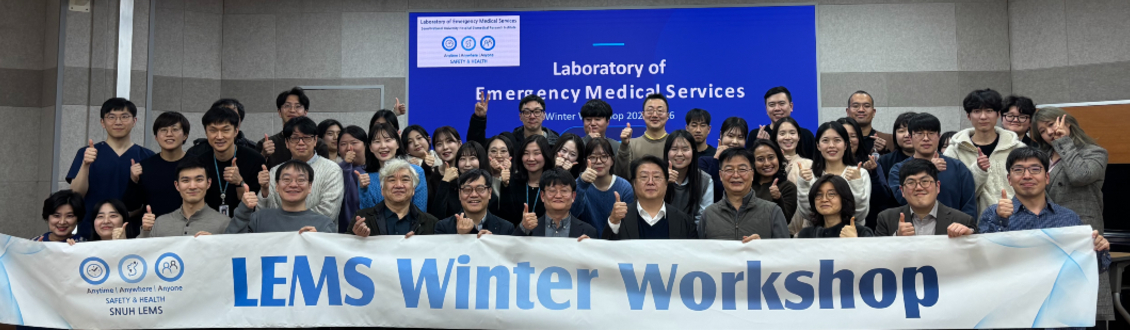
Emergency medical care is a specialized field dedicated to saving lives by stabilizing and resuscitating patients in the earliest stages of sudden illness or injury — conditions that can strike anyone, anywhere, at any time. Delivering the highest quality emergency care requires regional accessibility, speed, medical accountability, equity, and efficiency, all achieved through close collaboration among the general public, first responders, and emergency medicine specialists. With this mission in mind, the Laboratory of Emergency Medical Services (SNUH LEMS), part of the Biomedical Research Institute at Seoul National University Hospital, was officially established on December 24, 2010.
LEMS is composed of five sections: Preclinical Research, Education and Simulation Intervention, Prehospital System Monitoring, Disaster and Global Emergency Medicine, and Research Design Support and Capacity Building. Its work spans the full spectrum of emergency medicine research — from large-animal models of cardiac arrest and traumatic brain injury, biosignal research, and AI-driven data science, to EMS quality management in partnership with the Seoul Metropolitan Fire and Disaster Headquarters, emergency medicine education and simulation training, national databases for severe emergency conditions such as the Cardiac Arrest Registry, international collaboration through the Pan-Asian Trauma Outcomes Study (PATOS), and education in clinical research methodology.
Above all, LEMS is guided by a philosophy of social solidarity: alongside advancing cutting-edge medical technology, the laboratory is equally committed to applying existing knowledge to help build communities where people can live safe, healthy lives.
Seoul Mobile Intensive Care Unit (SMICU)
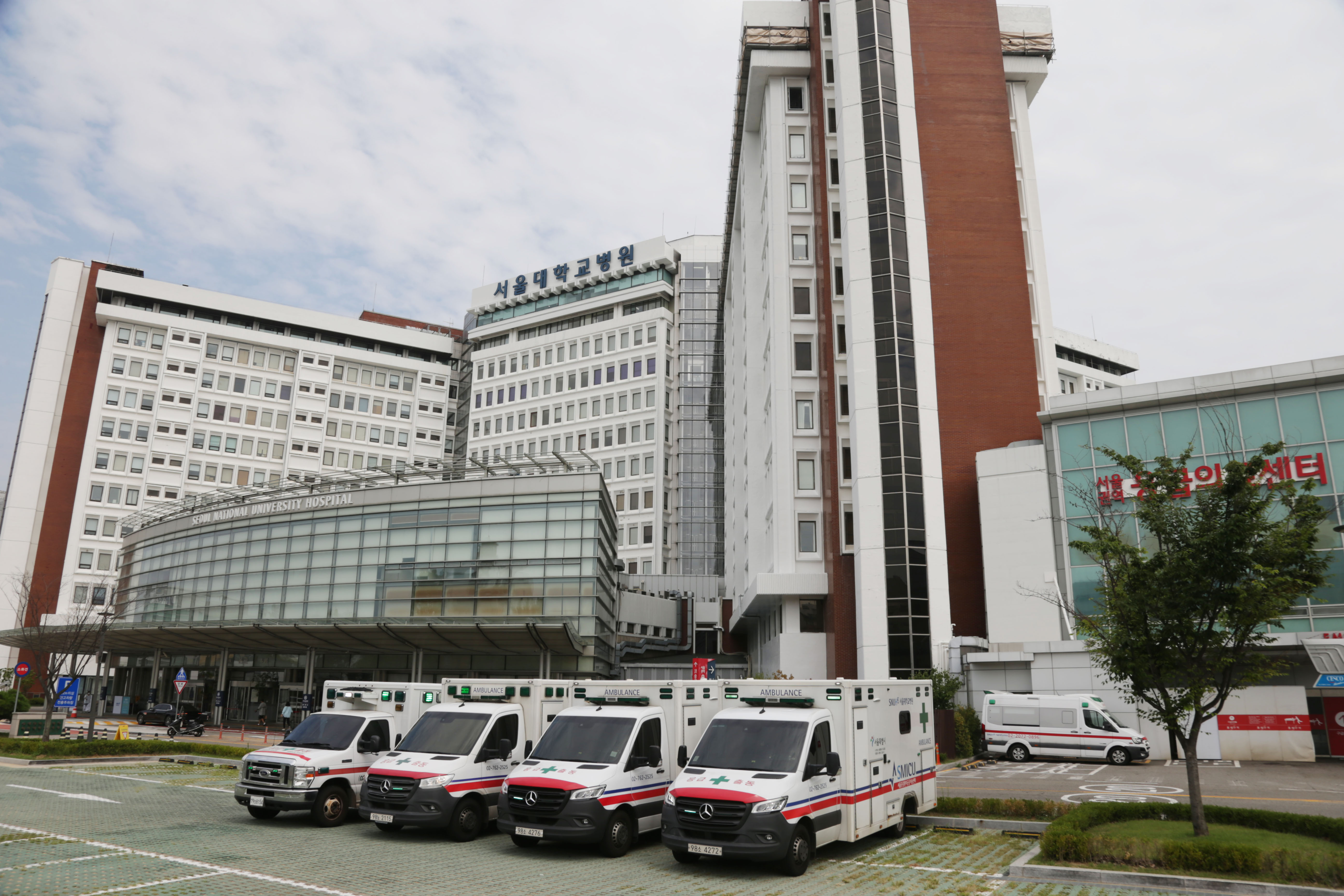
The Seoul Mobile Intensive Care Unit (SMICU) is a public health project commissioned by the Seoul Metropolitan Government and operated by Seoul National University Hospital to safely transfer critically ill patients between hospitals. Following a pilot program at SMG-SNU Boramae Medical Center in October 2015, SMICU began full operation in January 2016.
Inter-hospital transport of critically ill patients carries significant risk if monitoring and treatment during transit are inadequate. To close this gap, SMICU stands ready 365 days a year, around the clock, dispatching a three-person team consisting of an emergency medicine specialist, a Level 1 emergency medical technician, and a nurse.
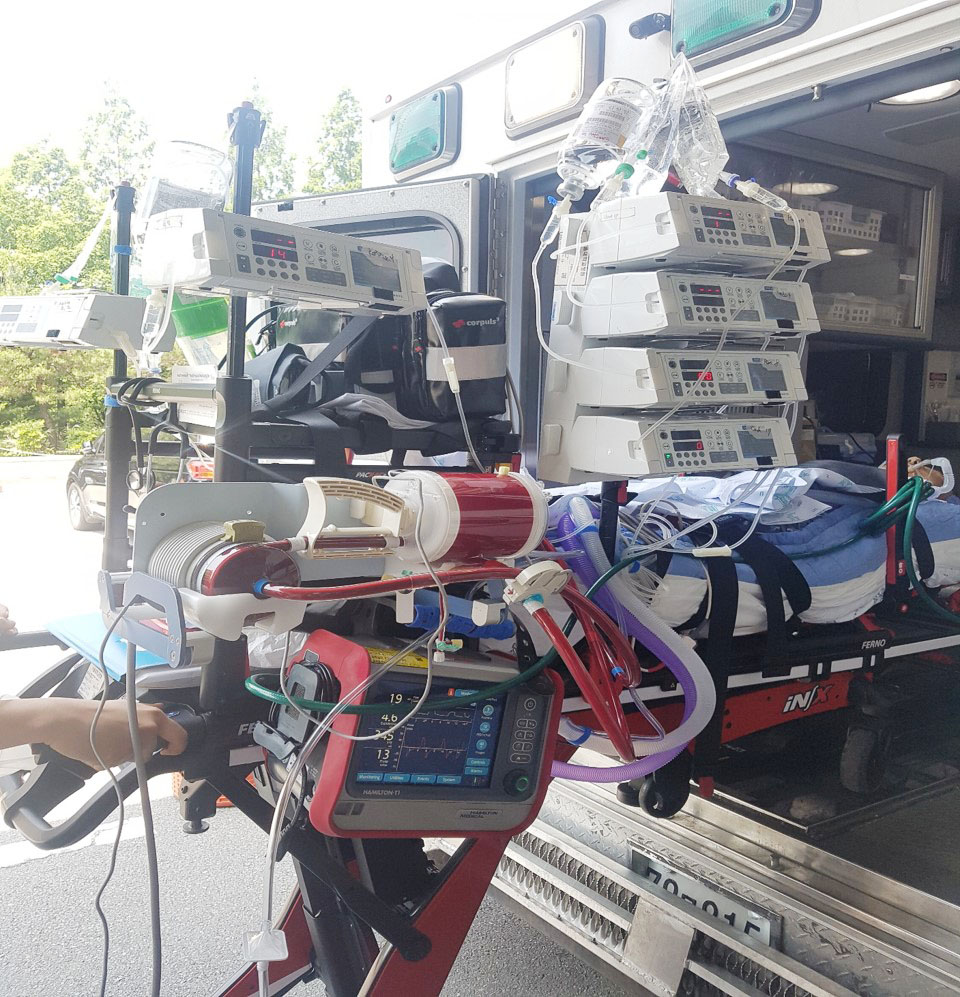
Each transport vehicle is a specialized Type III ambulance built specifically for critical care transport — roughly 1.5 times larger than a standard ambulance, with a patient compartment equipped to intensive-care-unit standards. The vehicles carry more than 20 types of critical care equipment, including extracorporeal membrane oxygenation (ECMO), targeted temperature management (TTM) systems, portable incubators, negative-pressure isolation units, and portable ultrasound — enabling the team to care for patients on mechanical ventilation, newborns, and patients with infectious diseases alike.
In 2023, SMICU expanded to four teams, now based at the Central and Gangnam stations along with dispatch bases in southwest and northeast Seoul. Between 2016 and 2025, SMICU has transported more than 9,000 critically ill patients. The unit also deploys to disaster sites as part of the Disaster Medical Assistance Team and runs training programs — including the Korean Critical Care Transport Course (K-CCTC) — to train specialists in critical care transport.
